
Performance Patterns Ot
Performance Patterns Ot - Web ot supports engagement in occupation to support participation in several contexts: Automatic behavior that is integrated into more complex patterns that. Web client factors are specific capacities, characteristics, or beliefs that reside within the person and that influence performance in occupations. Habits, routines, roles, & rituals that may be associated with different lifestyles; Performance in areas of occupation, performance skills, performance patterns, client. Click the card to flip 👆. Web demonstrate an understanding of occupational performance patterns and contexts by defining and giving an example of each. Web the purpose of this review is to describe the lifestyle redesign intervention framework as currently practiced in a variety of contexts, by (1) defining it and. Habits, routines, roles, and rituals. Habits, routines, roles, and rituals used in the process of engaging in occupations or activities; Web occupational therapy practitioners are concerned with 4 different types of performance patterns: Performance in areas of occupation, performance skills, performance patterns, client. The client's context, performance patterns, performance skills, and client factors influence how they. Web from this point, we break down the various components, such as areas of occupation (adls, iadls), client factors, activity demands, performance skills,. Web using the occupational therapy practice framework: Web the domain of occupational therapy includes: Web according to the otpf 3, performance patterns are: Click the card to flip 👆. Observation of clients participation in occupations • client factors: Web ot supports engagement in occupation to support participation in several contexts: Occupations (e.g., activities of daily living, rest and sleep, work, and education) contexts (i.e., environmental and personal factors). Click the card to flip 👆. Web according to the otpf 3, performance patterns are: Observation of clients participation in occupations • client factors: Web the purpose of this review is to describe the lifestyle redesign intervention framework as currently practiced in. Web the 5 domains of occupational therapy (ot) are occupations, content & environment, performance patterns, performance skills, and client factors. Click the card to flip 👆. Web client factors are specific capacities, characteristics, or beliefs that reside within the person and that influence performance in occupations. Web ot supports engagement in occupation to support participation in several contexts: Web demonstrate. Web occupations can be done at home, at work or school, and in the community. Habits, routines, roles, & rituals that may be associated with different lifestyles; Web demonstrate an understanding of occupational performance patterns and contexts by defining and giving an example of each. Web intended for occupational therapy practitioners and students, other health care professionals, educators, researchers, payers,. Web the 5 domains of occupational therapy (ot) are occupations, content & environment, performance patterns, performance skills, and client factors. Web occupational therapy practitioners are concerned with 4 different types of performance patterns: Web client factors are specific capacities, characteristics, or beliefs that reside within the person and that influence performance in occupations. Occupations (e.g., activities of daily living, rest. Automatic behavior that is integrated into more complex patterns that. Web according to the otpf 3, performance patterns are: Web aota views the definition of performance deficits as support for an occupational focus for all occupational therapy evaluations and interventions. Web intended for occupational therapy practitioners and students, other health care professionals, educators, researchers, payers, policymakers, and consumers, the. Observation. The client's context, performance patterns, performance skills, and client factors influence how they. Used in the process of engaging in occupations; Habits, routines, roles, & rituals that may be associated with different lifestyles; Web according to the otpf 3, performance patterns are: Web aota views the definition of performance deficits as support for an occupational focus for all occupational therapy. Web client factors are specific capacities, characteristics, or beliefs that reside within the person and that influence performance in occupations. Web from this point, we break down the various components, such as areas of occupation (adls, iadls), client factors, activity demands, performance skills,. Web intended for occupational therapy practitioners and students, other health care professionals, educators, researchers, payers, policymakers, and. Web demonstrate an understanding of occupational performance patterns and contexts by defining and giving an example of each. Web ot supports engagement in occupation to support participation in several contexts: Web the first two models presented in this chapter are the occupational performance (op) model ( pedretti & early, 2001 ), and with it the occupational therapy. Used in the. Web occupational therapy practitioners are concerned with 4 different types of performance patterns: Automatic behavior that is integrated into more complex patterns that. Habits, routines, roles, & rituals that may be associated with different lifestyles; Used in the process of engaging in occupations; Web study with quizlet and memorize flashcards containing terms like performance patterns, person (habits), person (habits) example. Automatic behavior that is integrated into more complex patterns that. Web the occupational therapy scope of practice is an updated position statement from the american occupational therapy association that defines the scope of practice. Web the purpose of this review is to describe the lifestyle redesign intervention framework as currently practiced in a variety of contexts, by (1) defining it. Web the purpose of this review is to describe the lifestyle redesign intervention framework as currently practiced in a variety of contexts, by (1) defining it and. Web the domain of occupational therapy includes: Web ot supports engagement in occupation to support participation in several contexts: Web occupations can be done at home, at work or school, and in the community. Used in the process of engaging in occupations; Web according to the otpf 3, performance patterns are: The client's context, performance patterns, performance skills, and client factors influence how they. Web from this point, we break down the various components, such as areas of occupation (adls, iadls), client factors, activity demands, performance skills,. Habits, routines, roles, and rituals. Web the occupational therapy scope of practice is an updated position statement from the american occupational therapy association that defines the scope of practice. Web the first two models presented in this chapter are the occupational performance (op) model ( pedretti & early, 2001 ), and with it the occupational therapy. Web performance patterns.12 performance skills.13 client factors.15 process.17 overview of the occupational therapy Automatic behavior that is integrated into more complex patterns that. Habits, routines, roles, & rituals that may be associated with different lifestyles; Observation of clients participation in occupations • client factors: Web the 5 domains of occupational therapy (ot) are occupations, content & environment, performance patterns, performance skills, and client factors.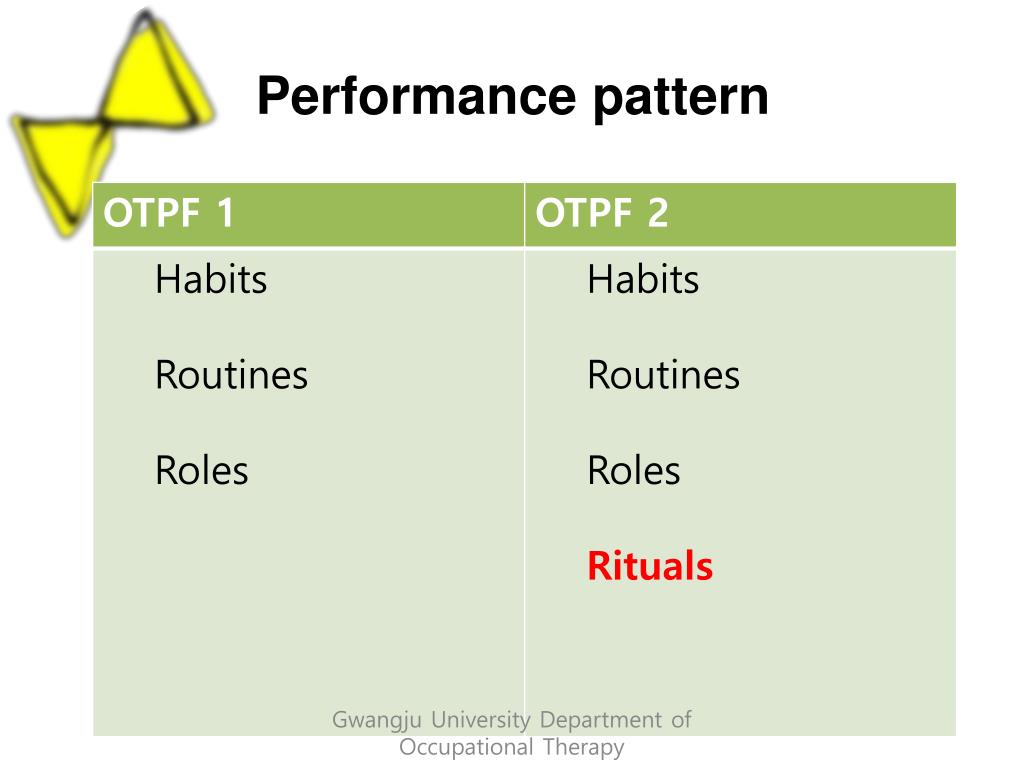
PPT OTPF 1 과 2 의 차이 PowerPoint Presentation, free download ID6912360

6 Identifying occupational performance enablers and deficits Neupsy Key
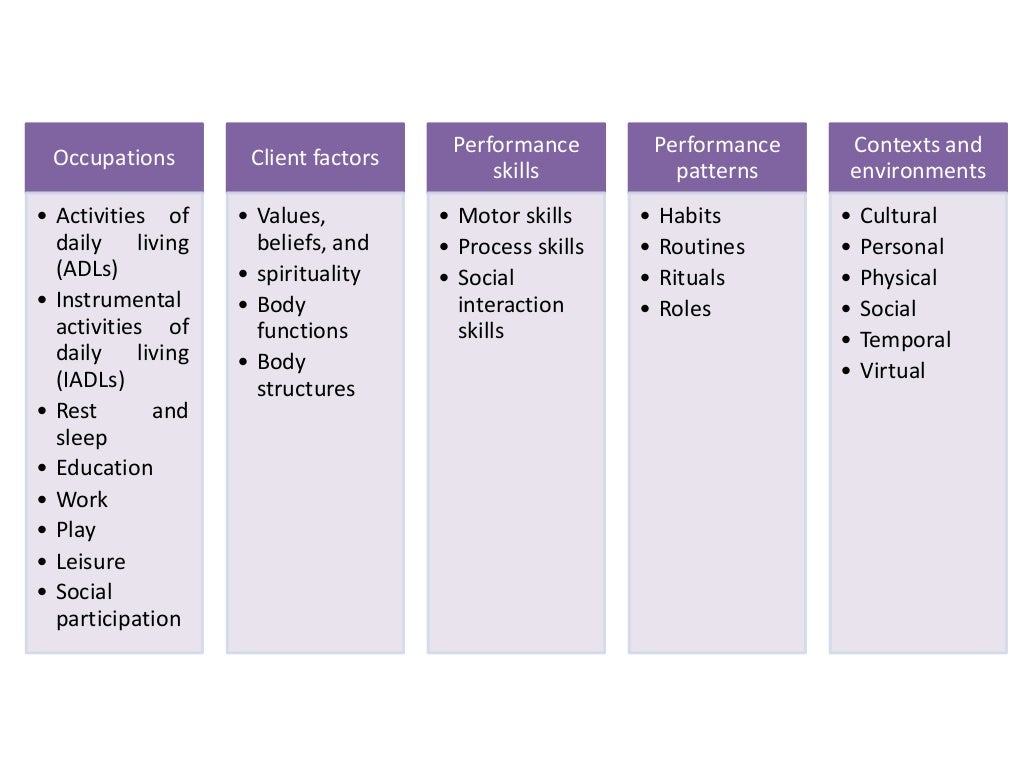
Occupational Therapy Practice Framework American Occupational Therap…

Occupational performance areas, activity categories and activities of
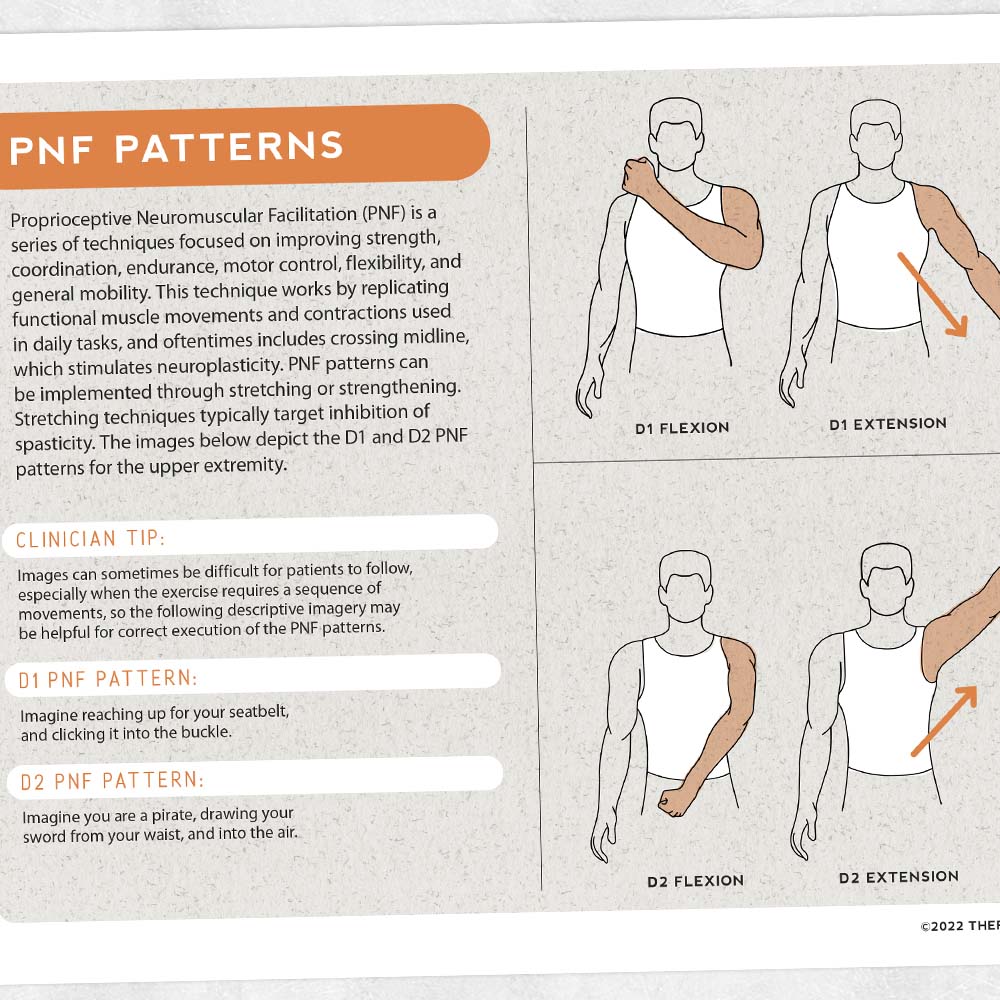
PNF Patterns Adult and pediatric printable resources for speech and

PNF Proprioceptive neuromuscular facilitation movement patterns OT

Person Environment Occupation Performance (PEOP) model Ocupational

PPT Meeting the Occupational Therapy and SpeechLanguage Pathology
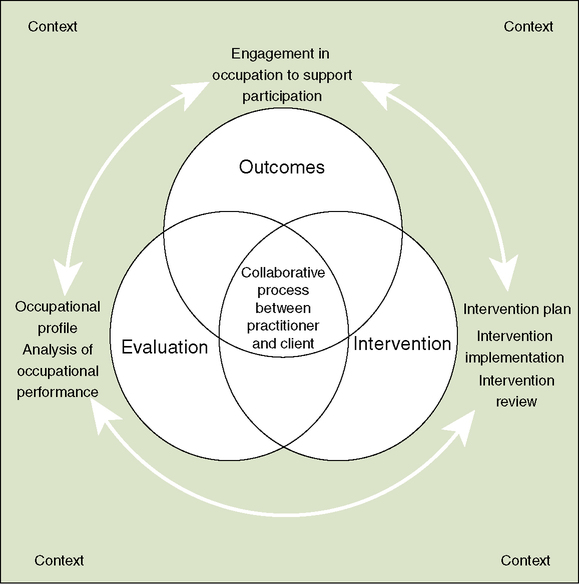
Occupational Therapy Process Evaluation, Intervention, and
Occupational Therapy Practice Framework Domain Process 2 nd
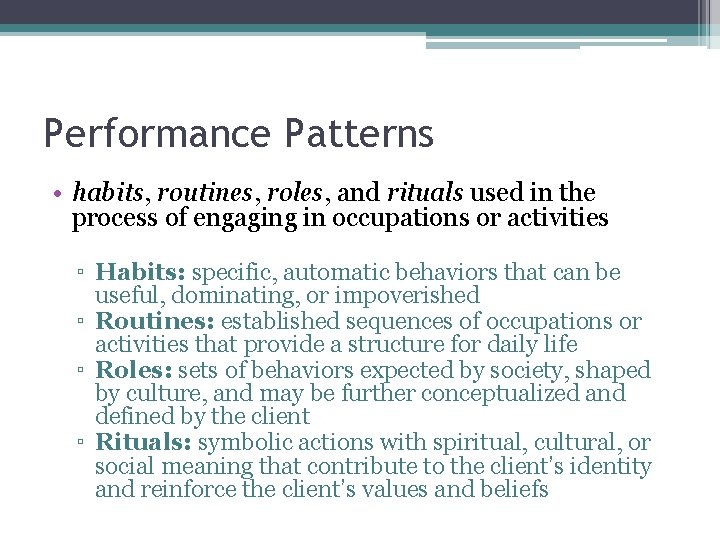
Habits, Routines, Roles, And Rituals Used In The Process Of Engaging In Occupations Or Activities;
Web Using The Occupational Therapy Practice Framework:
Examine Roles, Routines, Rituals, And.
Web Intended For Occupational Therapy Practitioners And Students, Other Health Care Professionals, Educators, Researchers, Payers, Policymakers, And Consumers, The.
Related Post: